Lagforce insulates and clads boiler flues and exhaust flue ductwork on industrial and commercial sites across Ireland. We work with mechanical contractors and site maintenance teams on new plant rooms, boiler replacements and upgrades to existing flue runs.
Why flues are insulated
- Personnel protection – an uninsulated flue runs hot enough to cause burns. Insulation and cladding bring the surface temperature down where people work and walk past.
- Protecting nearby services and structure – reducing the heat given off to cables, pipework, ceilings and roof penetrations close to the flue.
- Less heat lost in the plant room – helping to keep plant rooms and risers at a workable temperature.
- Keeping flue gases hot – on many flue runs, insulation helps keep the gases above their condensation point, reducing condensate inside the flue.
How we insulate a flue
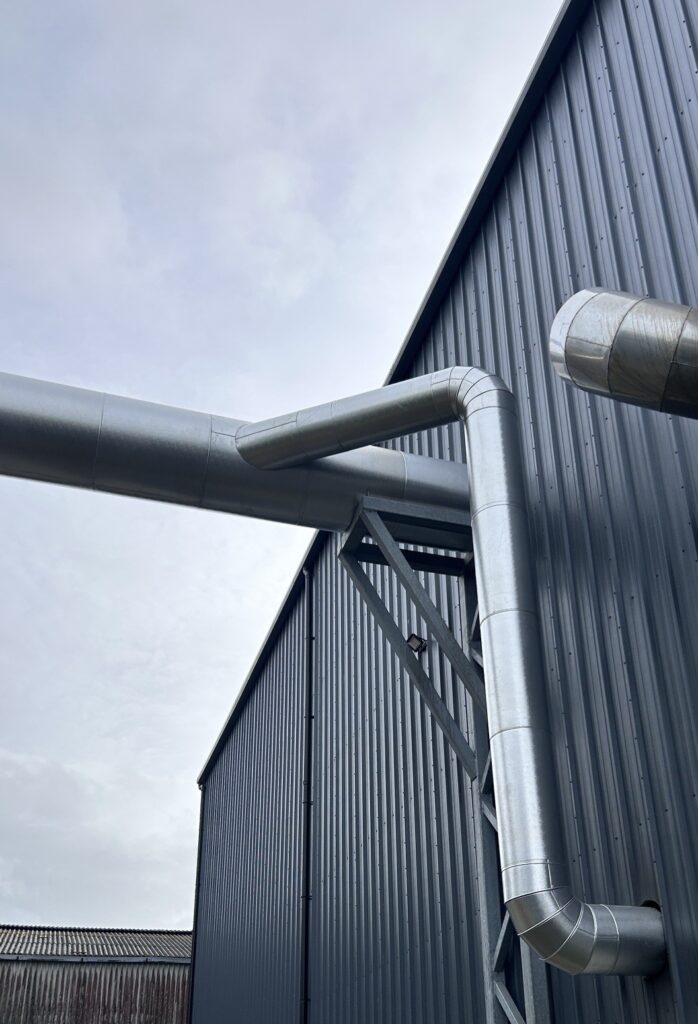
For high-temperature flue and exhaust ductwork we use mineral wool wired mat, which holds its shape at temperature and can be fitted closely around bends, tees, supports and flanges. The insulation is then finished with aluminium cladding fabricated in our own workshop to suit the flue’s bends, transitions and penetrations.
The cladding protects the insulation from damage, gives a clean, durable finish in plant rooms and on external runs, and is formed and sealed to shed water on flues that run outside or through the roof.
Where the specification calls for a different insulation or a stainless steel finish, we work to it. See the materials we install.
Recent flue work: Co. Meath
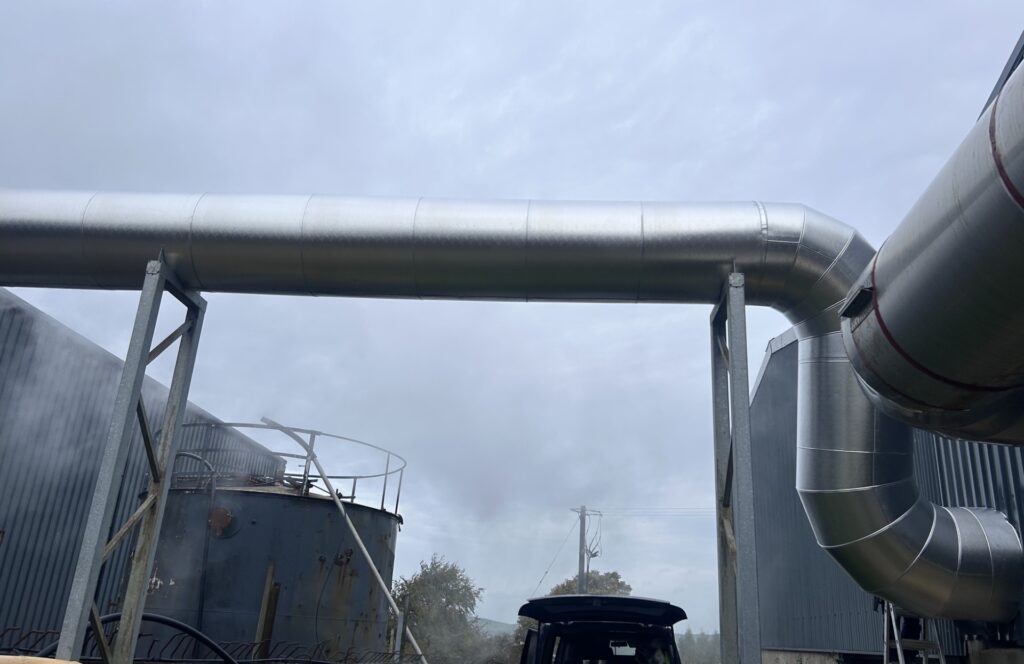
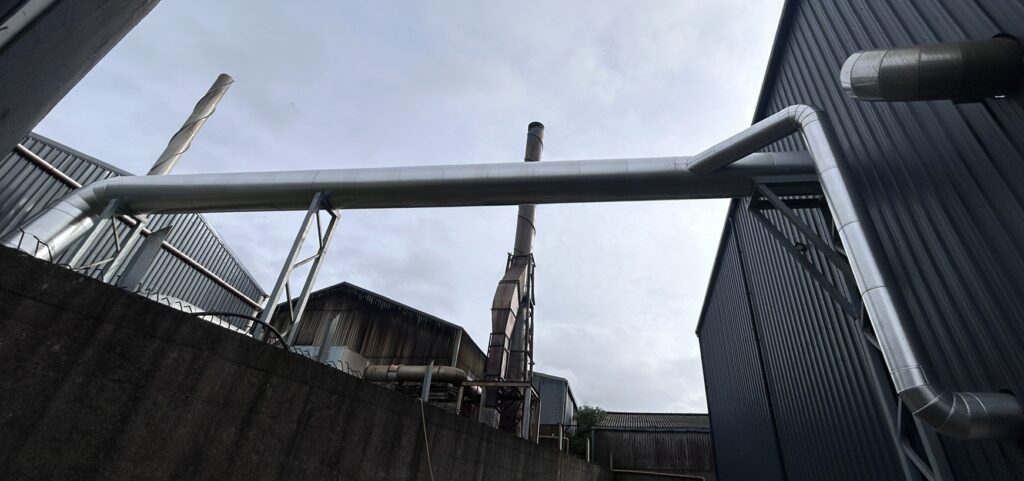
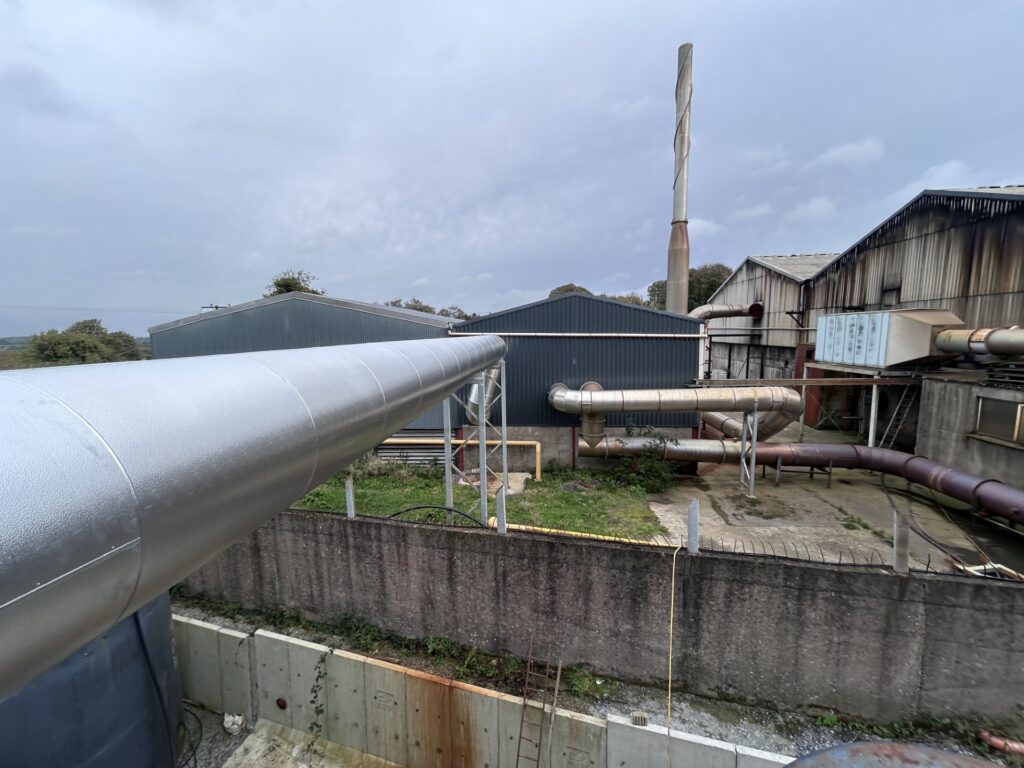
An external boiler flue at a metal recycling facility in Co. Meath, insulated with wired mat and clad in aluminium, running at high level between buildings on steel supports. See the full project.
Working with your project team
Send the flue route, sizes and the insulation specification or consultant’s requirements with your enquiry. Drawings and photographs of the existing flue help us price accurately and plan access, supports and penetrations before we arrive on site.